The 1st AMED/INCa Workshop on FLASH Radiotherapy will be held on 18 and 19 February 2027 at Act City Hamamatsu, Japan.
This workshop takes an international view of the field. It brings together physicists, chemists, biologists and clinicians from Europe, North America and Asia to compare results, methods and open questions, from radiation chemistry to the first patients. It is also an opportunity to gather the Japanese FLASH community, working across carbon ion, proton and electron facilities, and to build lasting links between these groups and the international teams.
Four sessions: FLASH chemistry (radiation chemistry at ultra-high dose rate), FLASH biology (biology, models and standards), FLASH physics (dosimetry and beam delivery) and FLASH clinics (clinical translation), closed by a round table on Japanese FLASH research and the international community.
The workshop is organised by Hamamatsu University School of Medicine, Institut Curie and The University of Tokyo, within the AMED and INCa ASPIRE collaboration on the mechanisms of the FLASH effect.
Registration
Free of charge
There is no registration fee. Please register so that we can plan the room, catering and badges.
FLASH radiotherapy, the delivery of radiation at ultra-high dose rates, spares normal tissue while preserving tumour control in a growing number of preclinical models, and the first clinical trials are under way. Yet the mechanisms behind the effect remain debated, and the conditions under which it appears are not standardised across beams and laboratories.
Same dose, a different pulse structure
Both deliveries put the same dose into the same tissue. What differs is how little time it takes, and how much dose each pulse carries. Move the slider to compare.
The same 10 Gy: compare the pulse structure
Conventional0.1 Gy/s
100 s
FLASH100 Gy/s
0.1 s
Both deliver pulses at 100 Hz. Conventional therapy puts about 1 mGy in each pulse; FLASH puts tens of milligray to several gray in each one. Above 40 Gy/s, we enter the range where the FLASH effect is reported. Orders of magnitude, for illustration.
What changes in the tissue
The FLASH effect in one picture
Same dose, same tumour. The only thing that changes is how long the delivery takes.
Conventional over minutes
Healthy tissue
Tumour control
FLASH in under a second
Healthy tissue
Tumour control
IrradiationEarlyLate
Lung tissue with a small tumour. Same dose, same tumour: the irradiation is about to start.
On the left, the dose arrives over minutes. On the right, the same 10 Gy arrive in under a second.
Early effects: after conventional delivery, the alveolar walls begin to thicken and inflammatory cells arrive. After FLASH, the tissue is spared. The tumour regresses in both cases.
Late effects: fibrosis settles in around the lesion after conventional delivery, while the alveoli stay open after FLASH. Tumour control is comparable in preclinical models.
An illustration, not data: orders of magnitude only. Understanding why this happens is what the workshop is about.
The open questions, and the four sessions of the workshop
Registration is free but required, so that we can plan the room, catering and badges. It takes one minute.
Who is coming
Loading registrations…
Counts per country only, no personal data.
You are registered
…
02
Programme
Programme
Four sessions over an afternoon and a full day. Each session brings together invited speakers, a talk by the organising committee, oral communications selected from the submitted abstracts, and a closing round of FLASH talks. The workshop ends with a round table on Japanese FLASH research and the international community. Click a session to see who speaks.
Invited talks15 to 20 minutes, then 5 minutes of questions
Oral communications12 minutes, then 3 minutes of questions
FLASH talks5 minutes, then 2 minutes of questions, at the end of each session
Interactive programme
Times are Japan time. Click a slot to open it. The oral communications will be added after the review, in mid-January 2027.
03
Invited speakers
Invited speakers
Eight invited speakers from Japan, Europe and the United States, and three talks by members of the organising committee. Photos, biographies and talk titles will appear as they reach us.
04
Call for abstracts
Submit an abstract
Abstract submission is open to all and free of charge. The organising committee selects abstracts either for an oral communication (12 minutes, then 3 minutes of questions) or for a FLASH talk (5 minutes, then 2 minutes of questions, at the end of the session). There is no poster session.
Structured in four parts: background and aims, methods, results, conclusion.
300 words at most across the four parts, in English.
Choose the session that fits your work best; the committee may move an abstract to another session.
No patient names, hospital identifiers or other identifying information.
The presenting author of an accepted abstract attends the workshop in person.
Submission deadline: 31 December 2026, 23:59 Japan time.
Structured abstract, 300 words maximum, in English.
Abstract received
…
Organiser view
06
Venue
Act City Hamamatsu
Act Tower and Act City Hamamatsu · Photo Syced, CC0
Address
Act City Hamamatsu
111-1 Itaya-machi, Chuo-ku Hamamatsu, Shizuoka 430-0928 Japan
Room: to be announced.
Getting there
About 5 minutes on foot from the north exit of JR Hamamatsu station, along a covered walkway. The Okura Act City Hotel is in the same building.
Hamamatsu is on the Tokaido Shinkansen line, between Tokyo and Nagoya. One rule matters more than any other: Nozomi trains do not stop in Hamamatsu. Take a Hikari (check that it stops in Hamamatsu) or a Kodama, which stops at every station.
From the airport
Tokyo Haneda · HND
About 2 hours
Keikyu line from the airport to Shinagawa (about 20 min), then a Hikari from Shinagawa to Hamamatsu (about 1 h 20). Shinagawa is much easier to change at than Tokyo Station.
The closest airport, with a few flights from elsewhere in Asia. Airport bus to Shizuoka station (about 1 h), then the Shinkansen west to Hamamatsu (about 25 min).
Buy on the day. Tickets are sold at JR ticket machines and offices in every station. Trains run several times an hour, and the first cars of each train are unreserved.
Price. From Tokyo or Shinagawa to Hamamatsu, roughly 8,000 to 9,000 yen one way.
Which train stops in Hamamatsu? Google Maps shows it for each departure: look for Hikari or Kodama.
Booking ahead is possible online with smartEX, useful at busy times.
Japan Rail Pass: not worth it for a single return trip to Hamamatsu.
Take the north exit. Act City is about 5 minutes on foot along a covered walkway: follow the signs for Act City and the Act Tower, the tallest building in the city. Taxis wait at the north exit, and all the hotels listed below are within walking distance.
Participants book their own accommodation. All the hotels below are around Hamamatsu station, within walking distance of the venue. The numbers on the map match the list.
Hotel photos: Wikimedia Commons, public domain. Details in the legal notice.
08
Discover Hamamatsu
Welcome to Hamamatsu
A few things to enjoy between two sessions: a city of history, music, good food, and light.
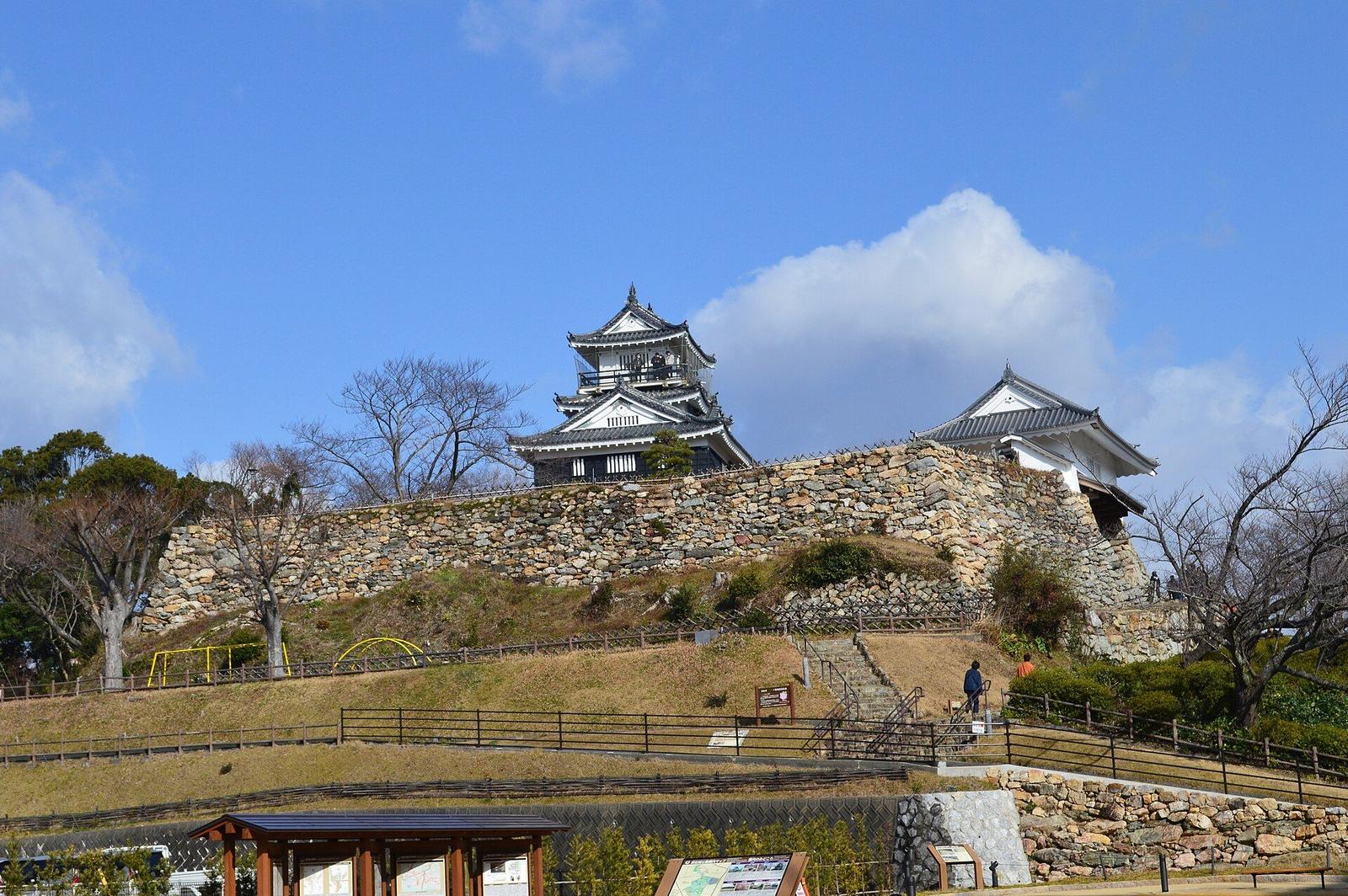
出世城shusse-jō
Hamamatsu Castle, the castle of success
Turn the card ↻
Hamamatsu Castle, the castle of success
Tokugawa Ieyasu, who went on to unify Japan, lived here for 17 years. So many of its later lords rose to high office that it became known as the castle of success. About 20 minutes on foot from Act City.
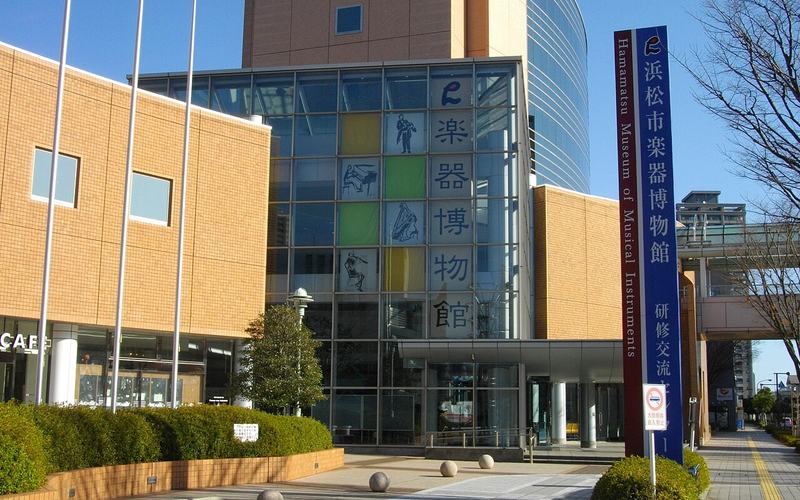
Yamaha, Kawai and Roland all have their headquarters in Hamamatsu. The Museum of Musical Instruments, right next to Act City, shows more than a thousand instruments from around the world, and the Act Tower is often said to be shaped like a harmonica.
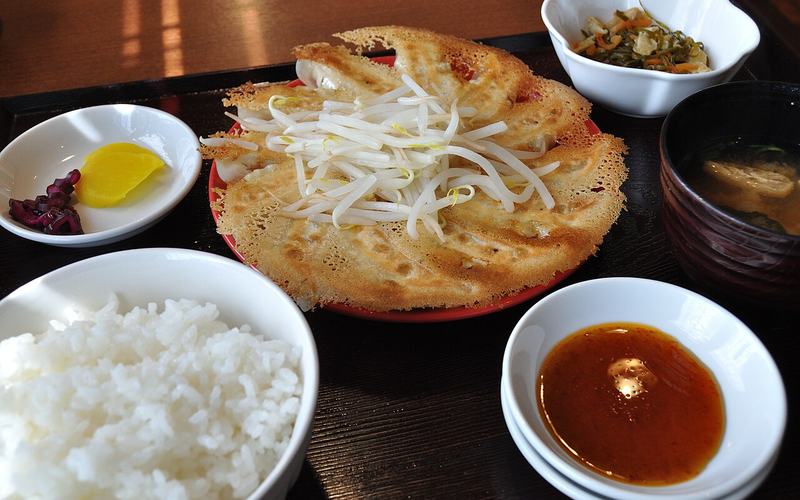
Fried in a circle in the pan and served with boiled bean sprouts in the middle. Hamamatsu and Utsunomiya compete every year for the title of Japan's gyoza capital.
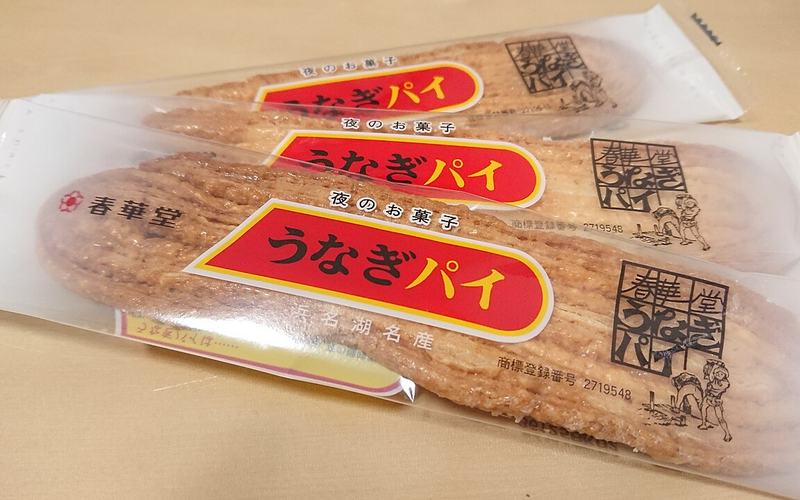
Lake Hamana has been a centre of eel farming since the end of the 19th century. Try grilled unagi on rice, and take home a box of unagi pie, the city's best known biscuit.
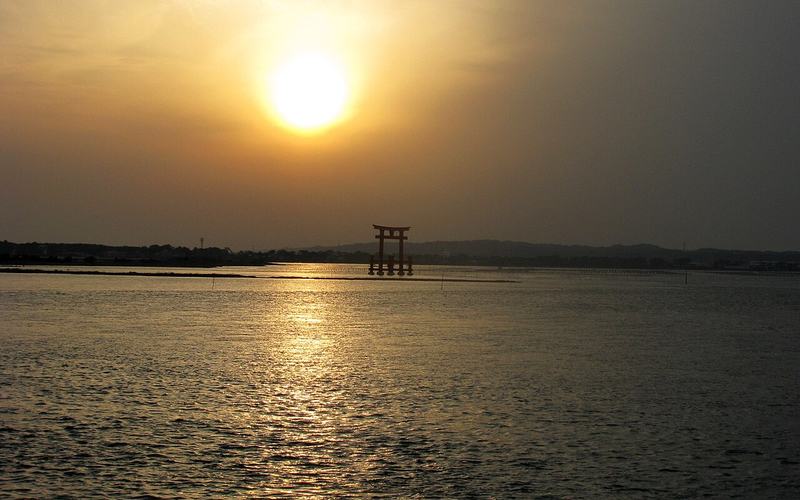
A wide brackish lake opening onto the Pacific. The red torii standing in the water at Bentenjima is a favourite at sunset, about 15 minutes from Hamamatsu on the JR Tokaido line.
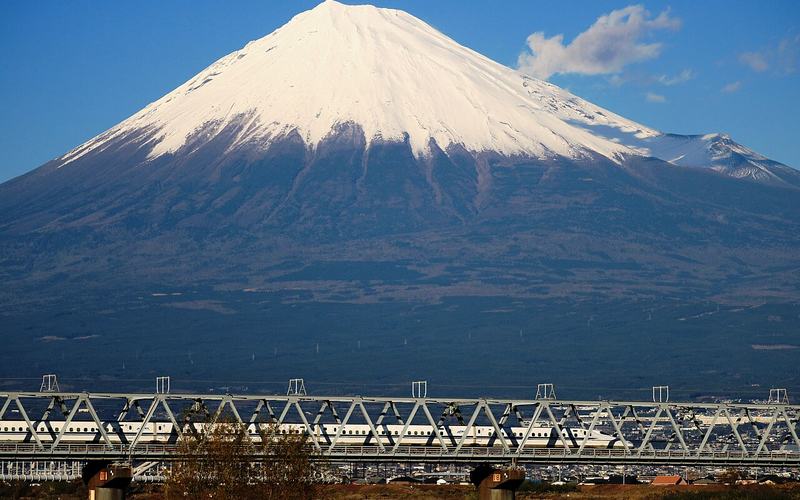
Coming from Tokyo, take a seat on the right side of the Shinkansen (seat E). On a clear winter day, Mount Fuji fills the window around Shin-Fuji, less than an hour before Hamamatsu.
In 1926, Kenjiro Takayanagi displayed the character イ on a cathode ray tube here, one of the first electronic television images. Today Hamamatsu Photonics makes the photomultiplier tubes of Super-Kamiokande and light detectors used in laboratories worldwide.
梅
梅ume
February in Hamamatsu
Turn the card ↻
February in Hamamatsu
Usually sunny and mild, roughly 2 to 11 °C, but the dry north wind of winter, the Enshu karakkaze, makes it feel colder: bring a windproof coat. It is also the season of plum blossoms.
08
Speaker information
For speakers
Invited talks15 to 20 minutes, then 5 minutes of questions
Oral communications12 minutes, then 3 minutes of questions
FLASH talks5 minutes, then 2 minutes of questions, at the end of each session
Slides
16:9, PowerPoint or PDF. Slides are loaded on the room computer during the break before your session: please bring them on a USB stick.
Timing
The chair keeps time. Please keep to your slot so that there is room for questions.
FLASH talks
Three or four slides are enough. FLASH talks follow one another at the end of each session.
Invited speakers
Please send the secretariat your photo, affiliation, provisional title and a short biography.
09
Organisation
Organising committee
Organised by
Hamamatsu University School of Medicine
Hamamatsu, Japan
Institut Curie
Paris and Orsay, France
The University of Tokyo
Tokyo, Japan
11
FAQ
Frequently asked questions
Is registration free?
Yes. Registration is free, and so are the coffee breaks and the lunch on Friday 19 February. Registration is still required, so that we can plan the room, the catering and the badges.
Can I attend without presenting?
Of course. Submitting an abstract is optional. Just register.
What is a FLASH talk?
A 5-minute presentation, followed by 2 minutes of questions, at the end of each session. It is a way to present preliminary data, a method or a new project. There is no poster session.
How long are the talks?
Invited talks last 15 to 20 minutes with 5 minutes of questions; oral communications 12 minutes with 3 minutes of questions; FLASH talks 5 minutes with 2 minutes of questions.
When is the abstract deadline, and when will I hear back?
Abstracts are welcome until 31 December 2026, 23:59 Japan time. Authors will be notified by email in mid-January 2027.
Can I submit more than one abstract?
Yes. Each abstract needs its own submission, and the presenting author must attend in person.
Can I change my registration?
Yes. Register again with the same email address: your registration is updated, and you receive a new confirmation.
Is there an online or hybrid option?
No. The workshop is held in person only, to favour discussion.
I need a visa to come to Japan. Can you help?
Yes. Tick the letter of invitation box in the registration form, and the secretariat will send you a letter. Apply early: processing can take several weeks.
Where should I stay, and how do I get there?
Act City is a few minutes from JR Hamamatsu station. See the Venue and Hotels pages for the route from the airports and a list of hotels within walking distance. Participants book their own accommodation.
Is there a social event?
Yes, on the evening of Thursday 18 February. Details will follow by email; you can tell us in the registration form whether you are interested.
Will the talks be recorded?
No recording is planned. Slides may be shared afterwards with the agreement of each speaker.
Another question? Write to the secretariat at flash.workshop.aspire@gmail.com.
12
Contact
Contact
Act City Hamamatsu
18 and 19 February 2027
Abstract submission and registration are open, free of charge.